
How to Split a Wedding Budget Between Its Items
United Arab Emirates 🇦🇪 — elegant and practical event planning inspiration.
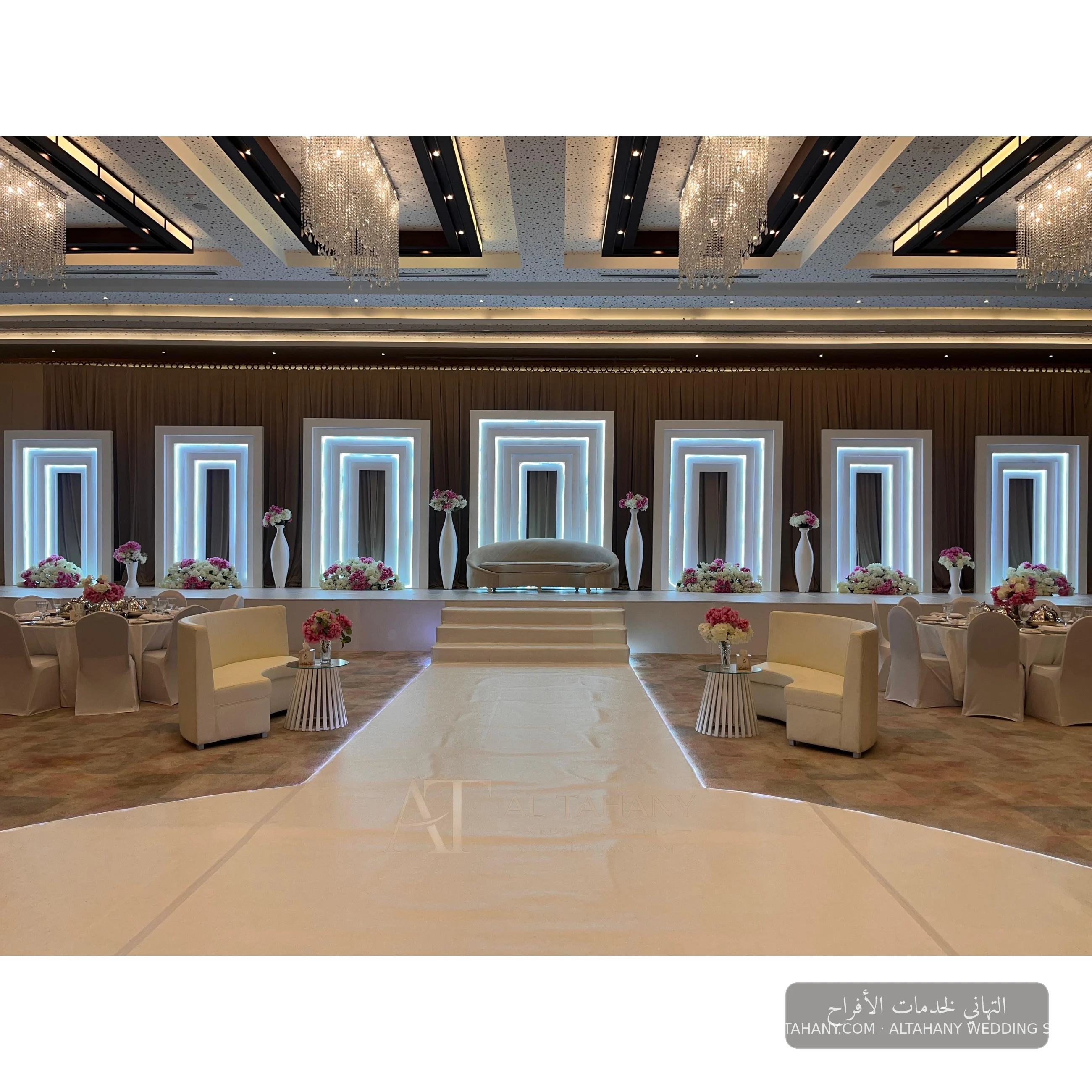
What usually breaks a wedding budget is not one expensive item but the absence of an order of priorities. A family starts with the kosha because it is the most visible in photographs, spends half the budget there, and then finds that sound, lighting and catering have to come out of what is left — so the cuts land exactly where guests notice.
Start from one question: what does a guest still remember a week later? Usually three things — whether they could hear, whether they ate well, and whether the photographs came out beautiful. None of those is necessarily the most expensive line.
Fix the total before you contact a single supplier. An undefined total rises on its own with every small addition that looks harmless in isolation.
Then split it across four groups: the venue and what follows from it, the visual setup (kosha, tables, lighting, flowers), sound and programme, and catering. Hold back a reserve of at least a tenth and do not touch it. Late requests — an extra chair, one more hour, a colour change — are the rule, not the exception.
Within the visual setup, lighting is the cheapest thing to change and the most visible. A modest hall with considered lighting looks better than a grand hall under flat white ceiling light. If you must cut, cut the size of the kosha before you cut its lighting.
In catering, the guest count is the real variable, not the number of dishes. Ten dishes for a hundred guests costs more and works less well than six for a hundred and fifty. Settle the count first.
Finally, write the budget on one page and share it with whoever decides alongside you. Most overruns happen when two people each approve an addition the other does not know about.
**How to tell the split is wrong before you pay**
Three signs show up in the quotation itself. First, one item exceeding a third of the whole — usually the kosha or the venue — which means the rest of the occasion will be built on what is left rather than on what it needs. Second, a large undetailed "miscellaneous" line: that is the one that grows. Third, sound and lighting not appearing as separate items — merging them into one "setup" line hides which of them took the larger share.
**The items always forgotten**
Transport, installation and dismantling; extra hours if the programme runs late; preparing the bride's room; power supply if the site is outdoors; and crew gratuities. Those five together are not small, and leaving them off the page does not leave them off the bill.
**When to raise the budget and when to cut the count**
If the money does not stretch, the first move is always to reduce the guest count rather than the quality of what guests see. A hundred guests at a well-made occasion serves your memory better than two hundred at an improvised one. That decision has to be taken early, before invitations go out.
**One page before signing**
Write down the total, each of the four groups' shares, the reserve, and the last date a change can be made without extra cost. That date is the most important line on the page, and the one most often left off.
At Altahany Wedding Services, we help turn an idea into a complete booking: choose a service, view our work, request a quote, message us on WhatsApp, then confirm the event details step by step.