
DJ and Zaffa: Choosing What Suits Your Event
United Arab Emirates 🇦🇪 — elegant and practical event planning inspiration.
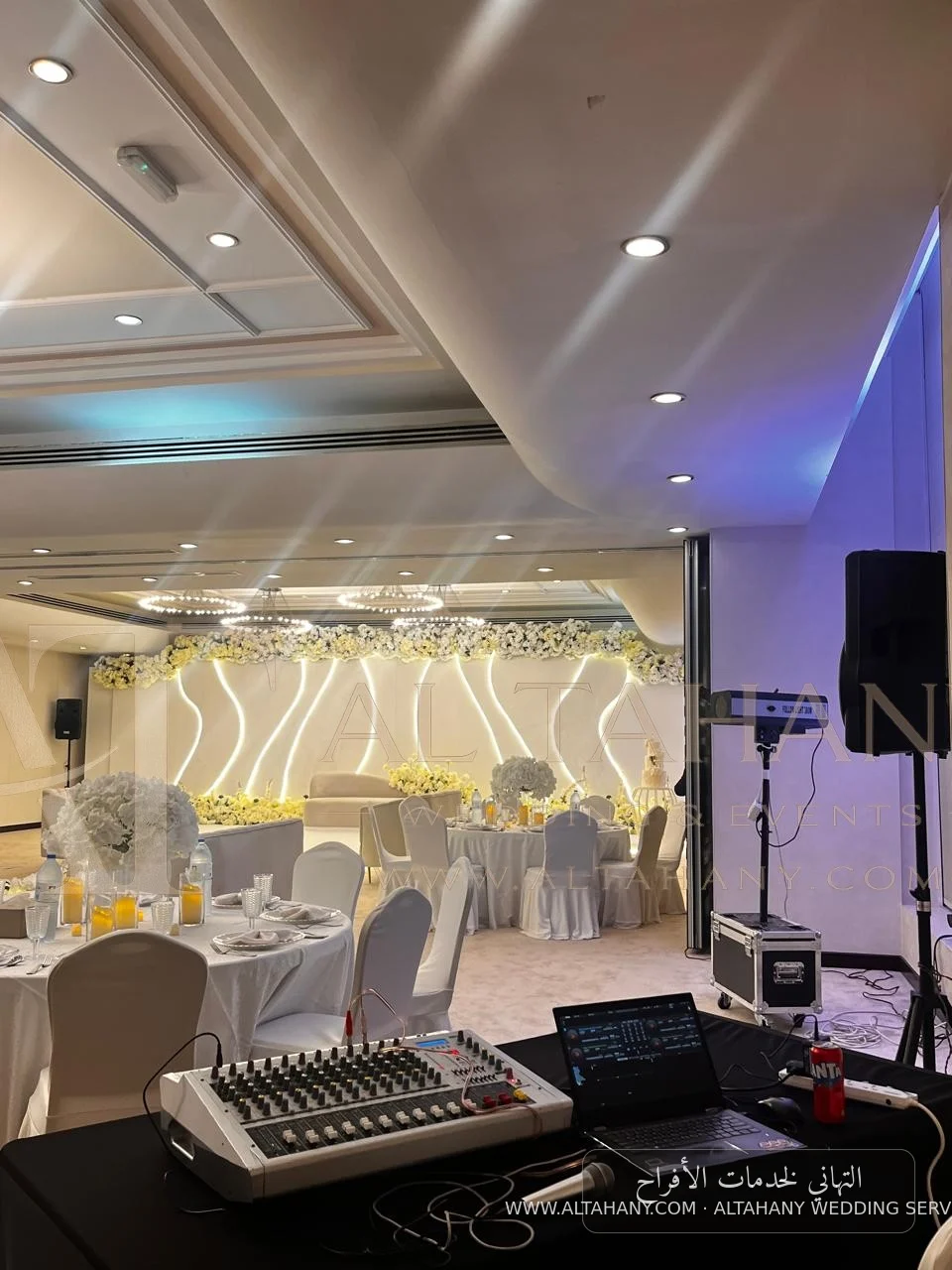
Sound is the first thing a guest notices and the fastest thing to ruin a night. The kosha can be stunning, but if the sound is distorted or the zaffa is out of step with the bride's entrance, what stays in people's memory is the fault, not the decor. This guide explains how sound systems and zaffas are chosen for UAE weddings.
Size the sound to the hall, not the speaker count
The right question is not "how many speakers?" but "how large is the hall, how high is the ceiling, and what are the walls made of?" A hall with glass or marble walls reflects sound and needs a completely different distribution from one with absorbent surfaces.
As a working rule: a hall seating two hundred needs a system distributed across four points rather than two, so the sound is not overwhelming at the front and thin at the back. Halls above four hundred guests need reinforcement speakers in the middle.
Tents behave differently from halls: fabric does not reflect sound the way a wall does, so the sound feels open and weak. A tent needs more power and closer placement to the guests.
The zaffa: the type sets the preparation
A classic zaffa on a ready recording is the simplest, and only needs precise synchronisation with the lighting and the bride's entrance. A personalised zaffa using the couple's names needs at least two weeks: recording, then review, then correction of the pronunciation of the names — a point that is often neglected and becomes awkward on the night.
A live group has stronger impact but needs floor space, extra power points, and a rehearsal with the sound crew. Never book a live group without telling the sound lead how many members it has and what instruments they play.
A DJ is not someone who plays songs
The difference between a good DJ and a weak one is reading the room: when to lift the tempo, when to bring it down for family photographs, when to stop entirely. A DJ who runs a pre-built playlist without watching the guests empties the dance floor within half an hour.
Agree three things in writing in advance: the requested songs, the forbidden ones, and the maximum volume you find acceptable. Many complaints after weddings come from sound louder than the family can tolerate.
Synchronising with lighting and photography
The bride's entrance needs the most coordination: hall lighting drops, the walkway lights, the zaffa begins, and the photographer moves into position. These four happen within seconds, and any delay in one shows up in the video.
The practical fix is for the sound lead, the lighting lead and the photographer to meet two hours before the event and agree a single cue to start on. Relying on "they will understand each other" is the reason behind most confused entrances.
What to ask before you sign
Ask about backup power: what happens if electricity drops for two minutes? Ask about a spare microphone — the only microphone failing during the speech is a real problem. And ask who will be present for the whole night, not only during setup.
Require the sound engineer to stay in the hall until the end. Systems that are installed and then left to someone untrained produce most of the mid-night problems.
At Altahany Wedding Services, we help turn an idea into a complete booking: choose a service, view our work, request a quote, message us on WhatsApp, then confirm the event details step by step.